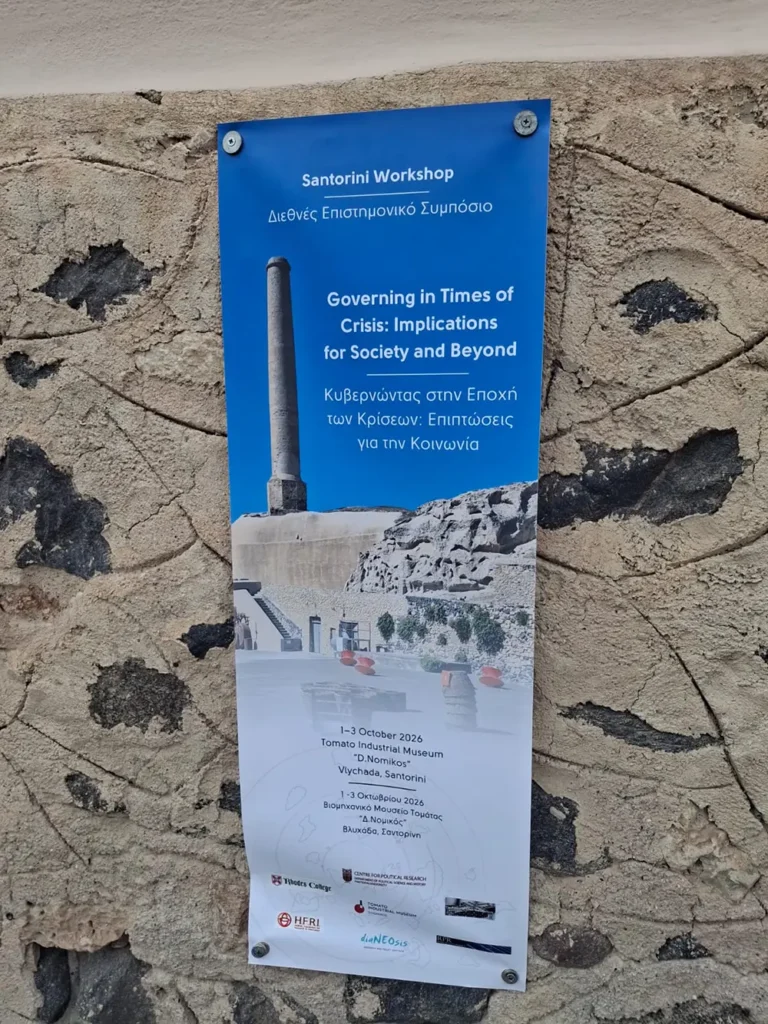
The future of Santorini and the Cyclades at the heart of a relevant discussion on sustainability and resilience.
The International Scientific Symposium “Governing in Times of Crisis: Implications for Society and Beyond” successfully concluded at the Tomato Industrial Museum “D.Nomikos” from 1 to 3 October. The symposium brought together a wide range of Greek and international researchers and was organized by the Centre for Policy Research of Panteion University of Social and Political Sciences, in collaboration with Rhodes College (Memphis, Tennessee, USA) and the academic journal Review
of Policy Research (RPR), with the support of the Tomato Industrial Museum “D.Nomikos”, diaNEOsis and the ECPR Research Network on the Politics of Crisis Management.
As part of the symposium, the opening session, entitled “The Cyclades in Times of Crisis: Sustainability and Resilience”, was held as a public event on Thursday, 1 October 2026.
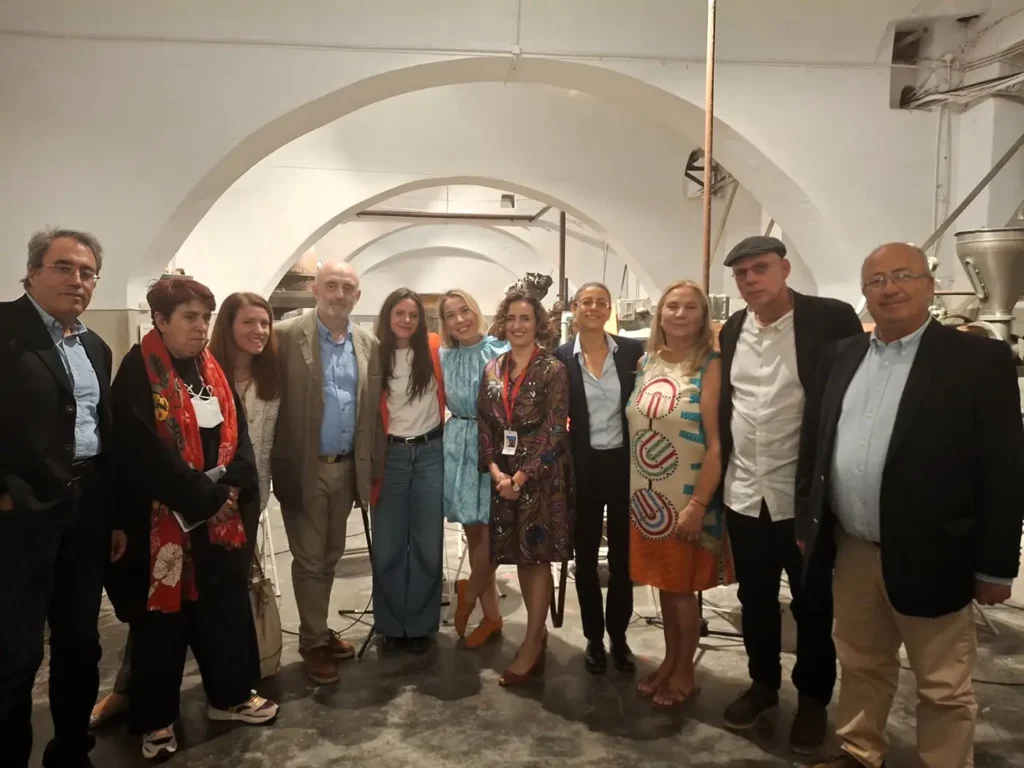
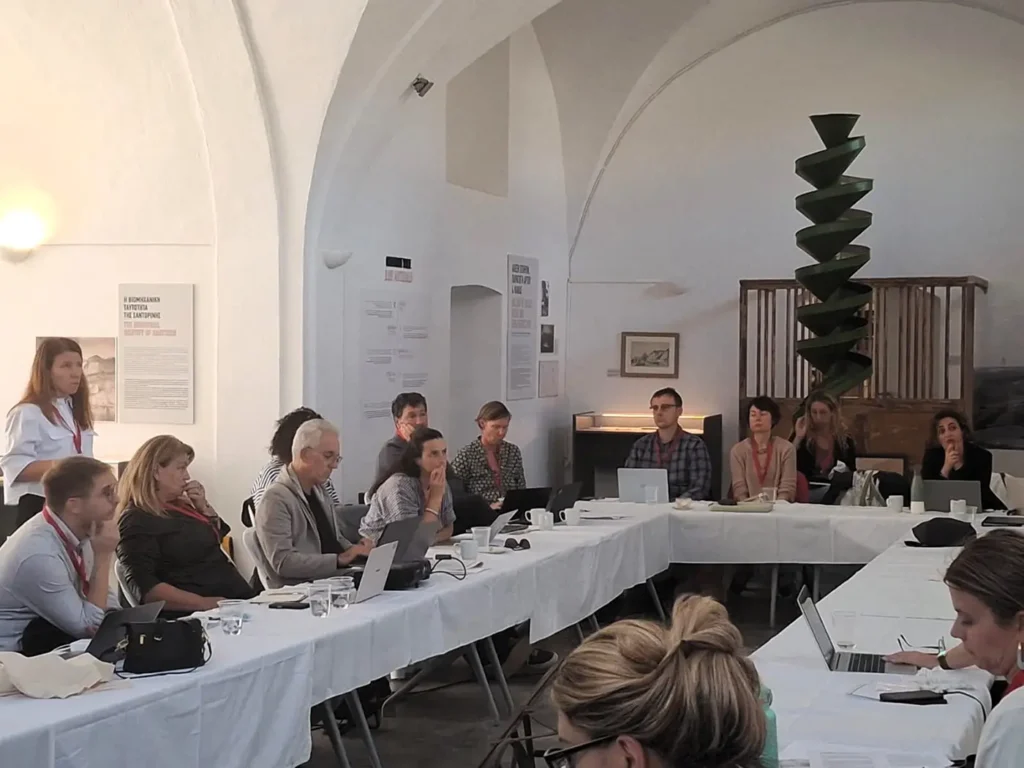
The event was opened by Mayor of Thira Nikolaos Zorzos, who highlighted the importance of dialogue and cooperation in shaping a sustainable future for Santorini.
The discussion, moderated by Faye Makanatsi, Director of Research at diaNEOsis, highlighted five interconnected dimensions that are essential to Santorini’s ability to continue developing without undermining the very resources that make the island unique: cultural heritage and collective memory, archaeology and the historic landscape, agricultural production, the natural and built environment, and future tourism development.
Dr Dimitra (Mimika) Krigka, Archaeologist and PhD in Prehistoric Archaeology, highlighted lessons from the long historical trajectory of the Cyclades and the importance of protecting the historic landscape as a whole, beyond individual archaeological sites.
Petros Vamvakousis, Agronomist and Project Manager at Thera Terra Single- Member S.A., focused on the Santorini vineyard as a unique agroecosystem and living cultural heritage, emphasizing the need to protect agricultural land and farming knowledge in the face of tourism development and climate change.
Nikos Delendas, Architect and Chair of the Thira-Santorini Local Committee of ELLET, addressed the pressures facing the natural and built environment, stressing that landscape protection is an investment in the island’s long-term value and quality.
Professor of Marketing Marianna Sigala, at University of Newcastle in Australia, raised the issue of moving from attracting ever-increasing numbers of visitors towards destination management, highlighting the potential of cultural, gastronomic and wine tourism.
Vani Nomikou, General Director of the Tomato Industrial Museum “D.Nomikos”, spoke about the role of museums in preserving the authentic memory of a place, with emphasis not only on tangible but also intangible cultural heritage, and on passing local knowledge on to younger generations.
A key point of agreement was that Santorini’s sustainability requires a holistic approach, one that connects tourism with the landscape, agricultural production and cultural heritage, while also fostering meaningful dialogue among the academic community, local government, professionals, cultural organizations and the local community.
The Tomato Industrial Museum “D.Nomikos”, as a place that preserves and reintroduces an important aspect of Santorini’s productive and social history, hosted the event, highlighting the importance of knowledge of the past and the active participation of the local community as essential tools for shaping the future.
For more information:
santorini-symposium—governing-in-times-of-crisis–implication.webnode.page